
Clinical AI should live inside the journal system, not beside it
Last updated Aug 16, 2026·3 min read
We didn't build another tool for clinics to adopt. VivioDent is an AI layer embedded inside the journal system — notes, perio charting by voice, and codes, with the clinic's compliance intact.
Clinical AI starts by asking dental clinics to do one thing: adopt another system.
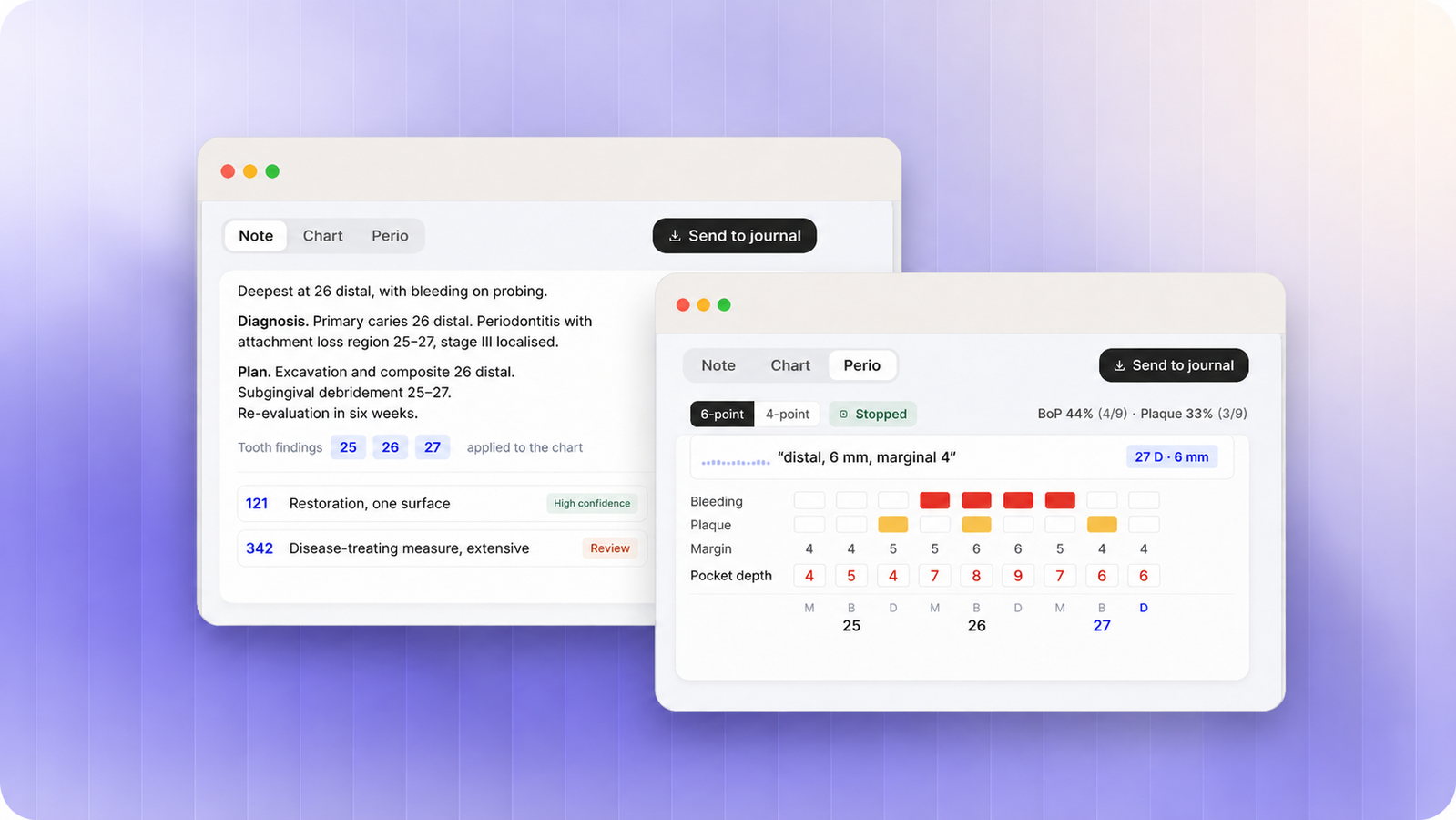
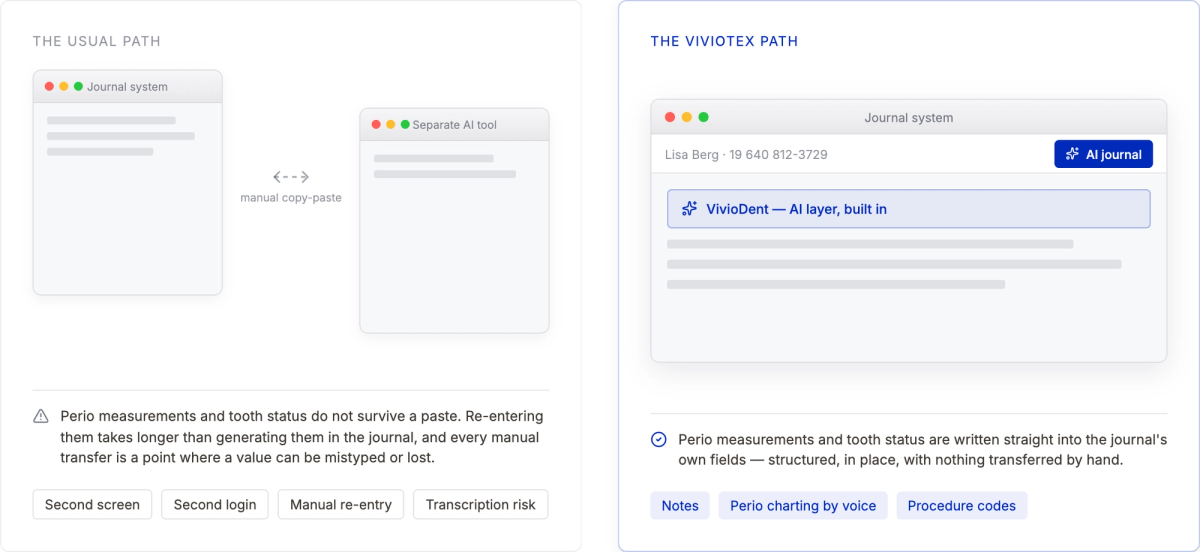
A dental clinic already runs on a journal system. It is where notes live, where charting happens, where codes get stored . Bolting a separate AI tool on top means a second screen, a second login, and one more place for things to fall out of sync. Viviotex took the other path. We have not built another platform that sits beside the clinician as a third-party tool. We built VivioDent as an AI layer embedded inside the journal systems clinicians already use every day. It writes the notes. It completes periodontal charting by voice. It suggests procedure codes. No second screen. No extra login. Nothing left for after hours.
Your compliance stays intact
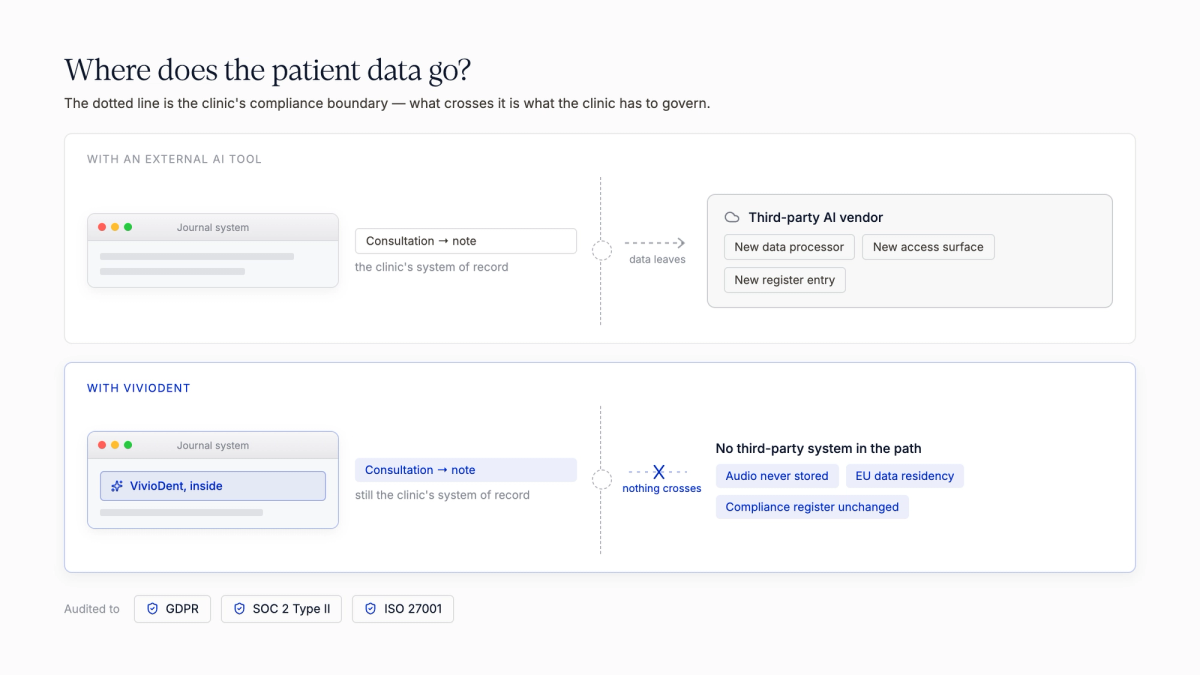
This is the difference that matters most, and the one a feature list hides. A clinic that adopts an external AI tool takes on a new data processor, a new access surface, and a new line in its compliance register — patient data now flows through a system that sits outside the journal. A clinic using VivioDent takes on none of that. The journal system remains the system of record, and nothing sits between the consultation and the patient's file. Audio is processed in real time and never stored. GDPR compliant, SOC 2 Type II audited, ISO 27001 certified.
One source of truth for your templates and phrases
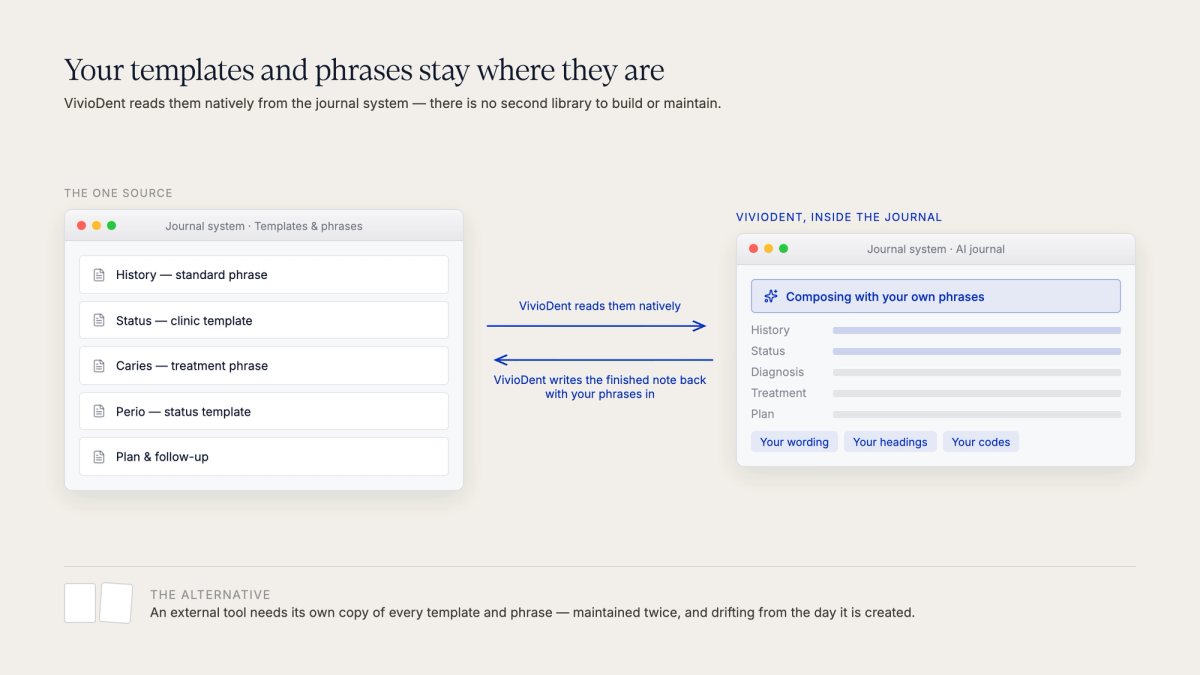
Clinics build up years of work in their journal templates and standard phrases. An external tool forces a choice: rebuild them in the new system and maintain two copies, or let the two drift apart. With VivioDent there is nothing to duplicate. Your templates and phrases stay centralized where they already live, and the AI writes into and consumes them. One place to store them, one place to maintain them, no double copies to keep in sync.
The note writes itself
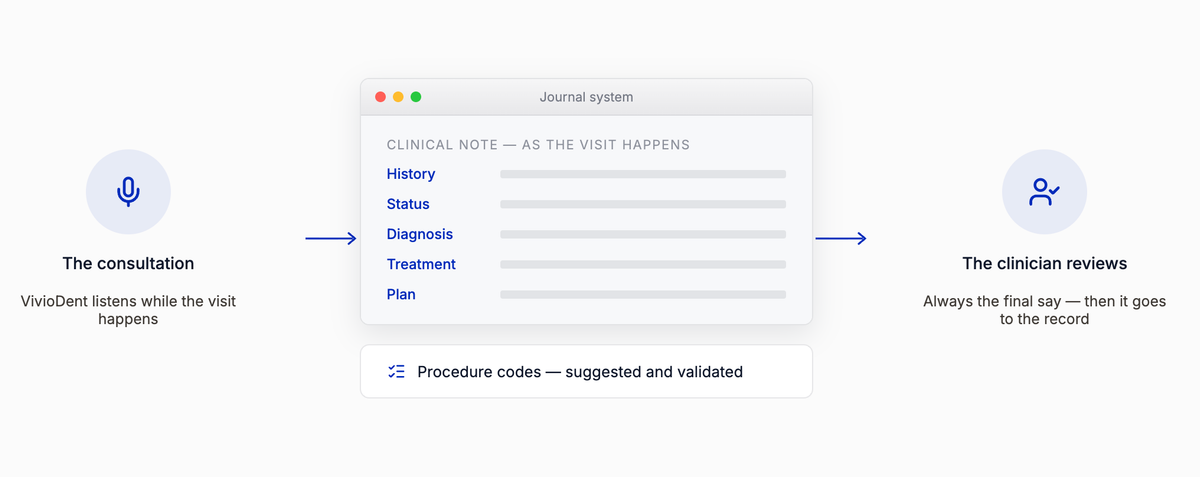
The dentist talks to the patient — that is the input. VivioDent listens to the consultation and produces the daganteckning as the visit happens: history, status, diagnosis, treatment and plan, formatted the way the practice already writes them. Tooth findings are structured. Procedure codes are suggested and validated before a clinician ever sees them, and the clinician always reviews and keeps the final say.
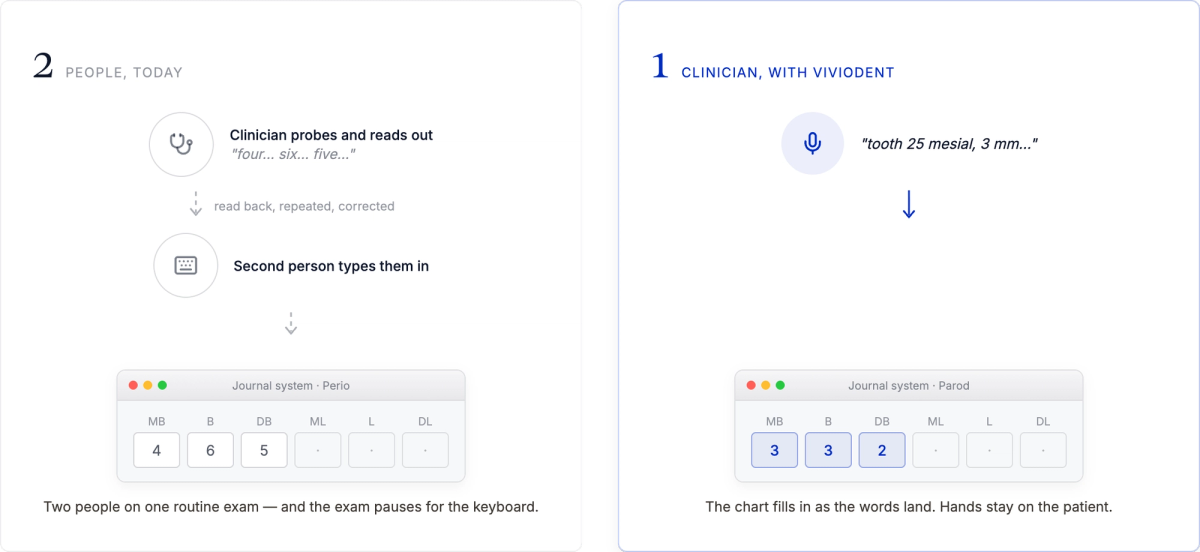
Perio charting still needs two people at the chair. In 2026.
One clinician probes and reads out the numbers. Another sits at the screen and writes them down. Two people, one routine exam. We ended that. VivioDent charts by voice: the clinician speaks, and the numbers land in the periodontal chart in real time, inside the journal system the clinic already uses. No second person. No stopping. Hands stay on the patient.
Why this matters now
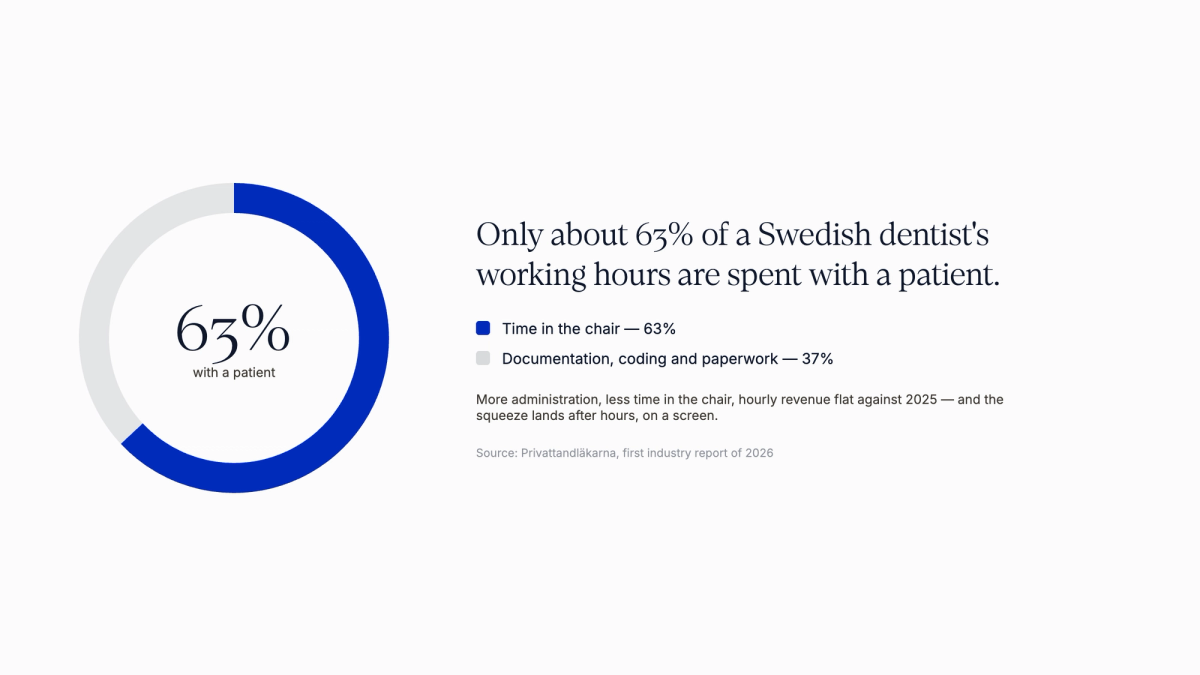
Example from Sweden: Only about 63% of a Swedish dentist's working hours are actually spent with a patient. The rest goes to documentation, coding, and the paperwork that piles up after the last patient has left — a figure from Privattandläkarna's first industry report of 2026, the first real read on what January's price regulation for patients 67+ has done to private practice. Three months in, the pattern is clear: more administration, less time in the chair, hourly revenue flat against 2025. Doing more, under more complex rules, for effectively the same money. And the squeeze isn't in the treatment room — it lands after hours, on a screen, when the day should already be over. When margins tighten, documentation stops being a detail. It becomes one of the few levers a clinic has left.
The workflow you already have
The best clinical AI is not another tool you switch to. It is part of the workflow clinicians are used to. And we can show you the flow on your own journal view.